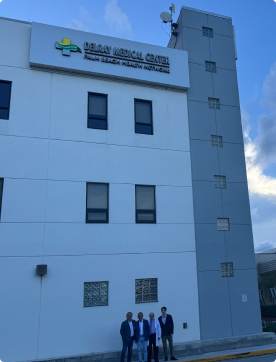
Regional Level I Burn Triage Authority
Burn triage within the regional trauma catchment is directed through the Level I trauma system.
Reconstructive surgeons determine institutional disposition — whether injuries can be safely managed within the trauma center or require transfer to a dedicated tertiary burn unit.
Disposition is a reconstructive judgment, not an automatic protocol.
Depth, surface area, perfusion integrity, comorbidity, and anticipated structural consequence guide triage.
Early disposition defines reconstructive trajectory.
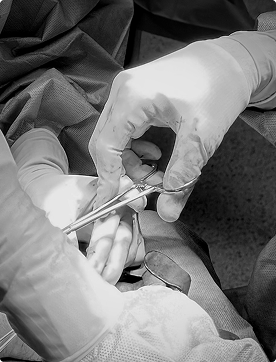
Acute Burn Management With Reconstructive Foresight
When institutional management is appropriate, care may include:
- Early excision and grafting
- Perfusion-guided tissue assessment
- Contracture prevention planning
- Staged reconstructive sequencing
- Functional preservation prioritization
Acute intervention is structured around durability and preservation of future operative latitude rather than short-term closure alone.
Post-Burn Structural Restoration
Burn wound closure does not equal functional recovery.
Staged reconstruction may include:
- Contracture release
- Functional hand restoration
- Tissue expansion
- Regional or free flap reconstruction
- Tendon and nerve protection
- Structural reinforcement of compromised graft beds
This scale of structural burn reconstruction is characteristic of tertiary trauma environments rather than isolated outpatient scar revision.
Industrial & Functional Thermal Injury
Thermal injuries in construction, electrical, agricultural, and automotive settings frequently produce deep structural compromise extending beyond dermal injury.
Delayed reconstructive oversight increases the likelihood of permanent contracture, tendon adherence, and preventable functional loss.
Return-to-work potential depends on early reconstructive integration and staged functional restoration.
Advanced Scar Modulation Within Structural Rehabilitation
Laser-based scar modulation, including ablative fractional and full-field resurfacing, is integrated into a reconstructive framework to improve pliability, tendon glide, and mobility.
Scar biology is addressed as part of structural recovery.
Trauma-Integrated Longitudinal Care
Burn recovery often unfolds over months to years.
Reconstructive surgeons direct staged intervention and rehabilitation integration within a trauma-scale institutional system.
This level of burn reconstruction reflects
reconstructive doctrine embedded in Level I trauma infrastructure.