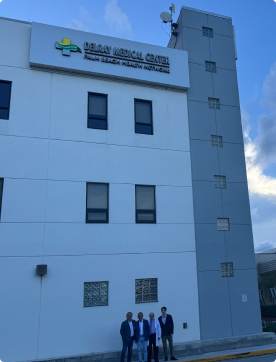
Structural Tissue Failure Requires Reconstruction
Chronic and complex wounds represent structural tissue failure rather than superficial delay in closure.
Successful management requires identification of perfusion integrity, biomechanical stability, and operative viability.
Surface-directed treatment without structural correction prolongs morbidity and expands tissue loss.
Advanced wound management at this tier is reconstructive surgery.
Trauma-Integrated Wound Escalation
Complex wound cases are referred from across Palm Beach County, South Florida, and seasonal out-of-state populations when escalation beyond conventional wound management is required.
These frequently involve:
- Hardware exposure
- Degloving and Morel-Lavallée lesions
- Postoperative spine wound failure
- Traumatic avulsion injuries
- Geriatric dermal structural loss
- Burn wound breakdown
- Failed prior closure attempts
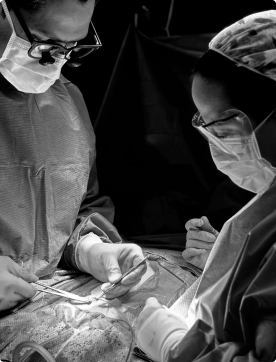
Escalation occurs within trauma-integrated reconstructive infrastructure capable of operative intervention, staged closure, and continuous reassessment.
Reconstructive Tissue Salvage Doctrine
Reconstructive tissue doctrine differs fundamentally from routine wound management.
It incorporates:
- Early perfusion interrogation
- Fluorescence angiography when indicated
- Recognition of avascular dermal avulsion
- Structural reinforcement techniques
- Timed operative debridement
- Negative pressure therapy with instillation
- Staged reconstructive closure
Peer-reviewed work has reconceptualized geriatric skin tears as avascular injuries requiring graft-level management rather than random-pattern flap preservation.
When treated according to perfusion status, failure rates decline into single digits.
Structural doctrine replaces passive wound observation.
Reconstructive Science — Not Protocol Management
Standardized wound protocols guide common presentations.
Complex structural wound failure frequently exceeds algorithmic management.
At this tier, wounds are evaluated through reconstructive physiology — perfusion science, dermal biomechanics, microvascular viability, infection kinetics, and staged tissue recovery.
Assessment integrates:
- Perfusion interrogation
- Structural integrity
- Biomechanical stress
- Microvascular viability
- Contamination burden
- Timing of operative escalation
Each wound is treated as a structural reconstructive problem rather than a pathway-defined condition.
This doctrine is taught within a trauma-integrated surgical training program where residents are trained to understand wound biology from first principles.
Complex wound salvage at this level reflects reconstructive science, not surface wound management.
Individualized reconstructive judgment — informed by physiology and operative capability — determines outcome.
Geriatric Trauma Concentration
Southern Palm Beach County represents one of the most densely populated retiree regions in the country.
Dermal thinning, anticoagulation, and microvascular compromise create high susceptibility to avulsion and degloving injury.
In this population:
- Minor trauma frequently produces structural failure
- Delayed intervention accelerates tissue necrosis
- Prolonged healing materially impacts independence and mortality
Early reconstructive involvement alters trajectory.
Surgeon-Led Integrated Management
Advanced wound salvage at this level is surgeon-directed and coordinated through referral-based collaboration including vascular assessment, infectious disease management, advanced wound technologies, and perfusion evaluation.
Reconstructive decision-making governs escalation.
This tier of wound care is infrastructure-dependent and integrated within trauma-scale systems rather than standalone outpatient management.
Industrial & High-Energy Injury
High-energy industrial trauma frequently produces contamination, segmental muscle loss, and hardware exposure.
Early tertiary reconstructive involvement prevents chronic wound evolution and prolonged disability.
Delayed escalation materially increases operative burden and long-term impairment.
Professional Referral
Consultation may be requested for complex wound failure, hardware exposure, degloving injury, geriatric avulsion, postoperative breakdown, and advanced infection requiring reconstructive oversight.