Research & Publications
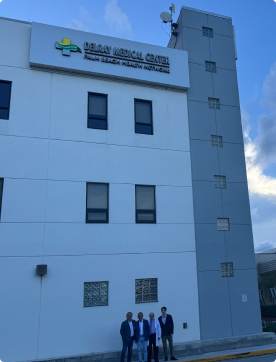
Plastic Surgery Trauma Associates operates within a structured academic framework embedded in a Level I trauma center environment.
Operative strategy is informed by peer-reviewed publication, formal physiologic investigation, and national and international presentation in tertiary reconstructive surgery.
Programmatic doctrines are derived from the study of tissue perfusion, structural stability, and operative sequencing in high-acuity reconstruction.

Peer-Reviewed Work
Published contributions have addressed:
- Reclassification of geriatric skin tears as functionally avascular structural injuries
- Intraoperative SPY fluorescence angiography in dermal perfusion assessment
- Development and clinical implementation of SMART (Sandwiching Muscle Acellular Reconstruction Technique)
- Structural muscle flap integration in instrumented spine surgery
- Operative sequencing principles in extremity salvage
These investigations focus on physiologic reconstruction, perfusion-guided intervention, and long-term durability in complex tissue management.
A formal bibliography is available upon request.
National & International Presentation
Faculty have delivered peer-reviewed and invited presentations at national and international surgical forums addressing:
- Extremity salvage strategy
- Geriatric tissue stabilization
- Perfusion-guided reconstructive decision-making
- Peripheral nerve integration in limb salvage
- Complex spine soft tissue reconstruction
Technique Development
Innovative reconstructive frameworks developed within the program include:
- SMART — structural muscle-based reconstruction incorporating acellular matrix principles
- Perfusion-based redefinition of geriatric avulsion injury management
- Integrated spinoplastics methodology for instrumented spine surgery
- Systems-based physiologic reconstruction in high-energy trauma
These frameworks emphasize operative sequencing, vascular preservation, and structural durability.
Ongoing Clinical Series
Current investigative efforts evaluate:
- Durability of geriatric spine closure strategies
- Long-term outcomes in high-energy extremity reconstruction
- Functional restoration following catastrophic hand injury
- Integration of peripheral nerve reconstruction in limb salvage algorithms
Data collection emphasizes complication mitigation, structural longevity, and functional return metrics.