Geriatric Trauma In Southern Palm Beach County
Southern Palm Beach County represents one of the highest per capita concentrations of retirees in the United States.
Trauma in this population behaves differently.
A ground-level fall in an anticoagulated geriatric patient frequently triggers trauma activation because of elevated intracranial hemorrhage risk.
The same biologic vulnerability applies to soft tissue.
Loss of dermal elasticity, attenuated vascularity, and systemic anticoagulation produce avulsion-type injuries fundamentally different from younger trauma patterns.
Low-energy mechanisms generate large degloving flaps, hematoma propagation, and progressive tissue compromise.
These injuries are often underestimated at presentation.
When not addressed immediately and appropriately, avulsion flaps frequently progress to necrosis, prolonged wound care, repeat procedures, and healing trajectories measured in months rather than weeks.
In the geriatric population, prolonged wound healing extends beyond the skin.
Loss of mobility, repeated medical visits, deconditioning, and loss of independence can initiate functional decline.
Functional decline in this age group is strongly associated with increased morbidity and, in some cases, increased mortality.
Early tissue salvage alters that trajectory.
Reclassification Of Geriatric Skin Tears
Geriatric skin tears have traditionally been conceptualized as avulsed random-pattern flaps, implying retained dermal perfusion.
Perfusion imaging challenges that assumption.
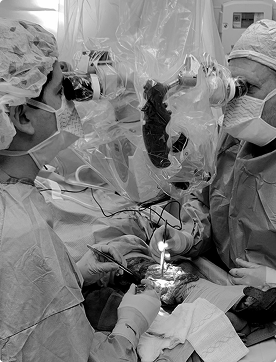
Using intraoperative fluorescence (SPY) angiography, we have consistently demonstrated that geriatric skin tears are functionally avascular at presentation.
Despite appearing viable macroscopically, perfusion assessment frequently reveals absent or critically diminished dermal circulation.
These injuries do not behave as vascularized random-pattern flaps.
They behave as graft equivalents.
This distinction is clinically significant.
When managed under a flap-based paradigm, failure rates are high.
When treated as avascular graft constructs requiring immediate stabilization, perfusion protection, and shear prevention, durability improves substantially.
Under a structured graft-based stabilization model, observed failure rates have decreased into the single-digit range.
This physiologic reclassification informs operative sequencing and underpins the tissue salvage doctrine applied within the Level I trauma center.
Morel-Lavallée Lesions In Fragile Tissue
Closed internal degloving injuries are frequently under-recognized in elderly trauma patients.
In low-elasticity geriatric tissue, blunt force trauma commonly shears perforating vessels between deep fascia and dermis.
This produces Morel-Lavallée–type lesions characterized by:
- Disruption of perforator circulation
- Hematoma propagation beneath attenuated skin
- Separation of dermis from underlying fascia
- Rapid compromise of marginal perfusion
Overlying skin may initially appear intact.
Delayed recognition frequently results in progressive ischemia and near-certain tissue loss.
Early identification alters outcome.
When recognized immediately, intervention focuses on:
- Prompt evacuation of shearing hematoma
- Re-approximation of separated tissue planes
- Stabilization to prevent ongoing shear
- Protection of remaining microvascular inflow
In fragile geriatric tissue, time-sensitive intervention significantly increases the likelihood of tissue preservation.
Failure to diagnose converts a salvageable injury into prolonged wound morbidity.
A high index of suspicion is essential in blunt trauma involving low-elasticity skin.
A Tissue Salvage Doctrine
Our program operates under a tissue salvage doctrine in high-acuity geriatric trauma.
Traditional excisional reconstruction models — appropriate in younger patients — often remove marginal but perfused tissue that elderly patients cannot physiologically replace.
In fragile geriatric soft tissue, preservation frequently produces more durable outcomes than aggressive reconstruction.
Tissue salvage prioritizes:
- Preservation of marginal perfused tissue
- Vascular respect during debridement
- Immediate structural stabilization of avascular flaps
- Reinforcement rather than replacement
- Limited operative burden when feasible
- Protection of perfusion over contour
This doctrine was developed and iteratively refined within the operative environment of a Level I trauma center.
Techniques developed under this framework have been presented nationally and are being prepared for peer-reviewed publication.
Operative Principles At Trauma Scale
Geriatric tissue salvage requires hospital-based operative infrastructure.
Core principles include:
- Hematoma evacuation with vascular preservation
- Stabilization of avascular flaps before necrosis progression
- Structural reinforcement of attenuated dermis
- Tension-minimized closure in low-elasticity skin
- Controlled staged intervention when biologically indicated
- Judicious use of negative pressure systems
Durability in geriatric trauma is achieved through biologic respect, structural reinforcement, and early intervention — not escalation.
Trauma-Scale Infrastructure
High-acuity geriatric trauma frequently requires:
- Operative access within a Level I trauma center
- Anesthesia support for frail and anticoagulated patients
- Multidisciplinary trauma coordination
- Inpatient monitoring when required
- Structured discharge and follow-up planning
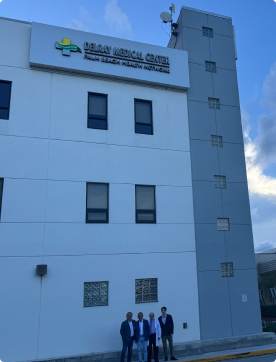
Within Southern Palm Beach County, hospital-based geriatric trauma reconstruction at this level occurs within the Level I trauma center at Delray Medical Center.
This patient population represents a defining component of regional trauma care.
Continuity Through The Delray Advanced Wound Center
Post-acute geriatric wound management continues through the Delray Advanced Wound Center, a multidisciplinary program directed by plastic surgery.
Care is coordinated through defined referral pathways that may include:
- Vascular evaluation when perfusion compromise is suspected
- Infectious disease consultation for complex infection management
- Advanced wound technologies when biologically indicated
- Perfusion reassessment when clinical deterioration occurs
Plastic surgery maintains oversight of wound trajectory and escalation planning.
High-risk geriatric wounds are monitored through defined intervals to prevent deterioration, recurrent hematoma, perfusion failure, and hardware exposure.
This structure allows transition from trauma-scale operative care to disciplined outpatient durability without fragmentation of responsibility.
When Escalation Is Required
When early intervention does not occur, referral frequently involves:
- Progressive flap necrosis
- Expanding hematoma under anticoagulation
- Infection in fragile tissue
- Hardware exposure in low-energy fracture patients
- Recurrent breakdown after prior closure attempts
At this stage, intervention proceeds within trauma-scale infrastructure to arrest deterioration and restore structural stability.
Tissue salvage remains prioritized when biologically feasible.
Direct Referral
High-acuity geriatric trauma requiring structured tissue salvage may be referred for coordinated evaluation within the Level I trauma center at Delray Medical Center.