When Trauma-Scale Reconstruction Is Necessary
Extremity trauma, structural burn injury, spine-related soft tissue failure, and advanced wound breakdown often require tertiary reconstructive infrastructure.
- Consultation is appropriate in the presence of:
- Limb-threatening ischemia
- Traumatic amputation
- Segmental muscle loss
- Exposed instrumentation
- Degloving or Morel-Lavallée lesions
- Peripheral nerve transection
- High-risk geriatric avulsion
- Complex postoperative wound failure
- Deep structural burn injury
Structural compromise is time-sensitive. Early reconstructive alignment preserves salvage potential.
Trauma-System Specialty Alignment
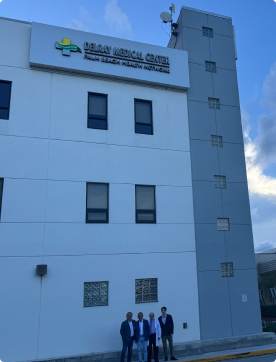
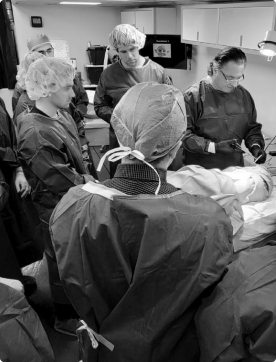
Reconstructive surgeons integrate within established specialty leadership inside the Level I trauma system.
Primary surgical ownership remains intact.
Soft tissue strategy, limb salvage sequencing, and structural reinforcement are coordinated through trauma-system alignment.
In high-acuity trauma, durable outcome depends on structural management rather than isolated intervention.
Delray Advanced Wound Center
OUTPATIENT ACCESS TO TRAUMA-INTEGRATED RECONSTRUCTION
The Delray Advanced Wound Center functions as the outpatient access point to the region’s tertiary reconstructive system.
Care is directed by reconstructive surgeons and governed by the same perfusion-based assessment and escalation framework utilized within the Level I trauma center.
Direct referral:
Delray Advanced Wound Center – (561) 495-3412
- Appropriate for:
- Complex non-healing surgical wounds
- Hardware exposure without systemic instability
- Geriatric avulsion injuries
- Recurrent wound breakdown
- Post-burn structural assessment
- Industrial injuries requiring staged restoration
When hospital-level intervention becomes necessary, transition occurs within the same institutional reconstructive infrastructure.
Industrial & Functional Consequence
In high-energy industrial injury, reconstructive sequencing directly influences Maximum Medical Improvement, impairment rating, and return-to-work potential.
Delayed tertiary involvement materially increases risk of permanent structural compromise.
Transfer Coordination
Interfacility transfers are coordinated through the Tenet Transfer Center:
855-952-(PBHN) 7246
Reconstructive consultation is embedded within the Level I trauma framework to allow coordinated escalation without interruption.