When Injury Complexity Requires Trauma-Scale Reconstruction
Certain injuries demand trauma-integrated microsurgical infrastructure beyond standard operative environments.
These include:
- Traumatic amputation
- Limb-threatening ischemia
- Segmental muscle loss
- Exposed orthopedic instrumentation
- Peripheral nerve transection
- Complex spinal wound failure
- Extensive degloving
- Geriatric avulsion with perfusion compromise
Reconstructive delay narrows salvage potential.
Early tertiary involvement preserves operative latitude.
Level I Trauma Integration
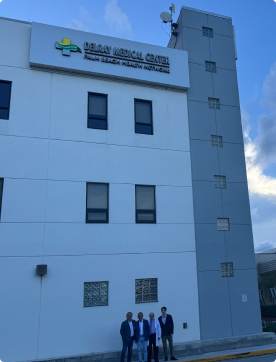
Evaluation and operative management occur within a Level I trauma center equipped for:
- Immediate vascular and orthopedic collaboration
- Neurosurgical integration
- Microsurgical replantation and limb salvage
- Critical care support
- Multi-stage operative sequencing
- Continuous postoperative monitoring
Escalation occurs within a unified institutional framework.
In high-acuity trauma, inter-facility fragmentation alters outcome.
Regional Catchment & Air Transport
Complex extremity and reconstructive cases are referred from across Palm Beach County, surrounding regions, and seasonal out-of-state populations.
When salvage potential remains viable, transfer via air ambulance is coordinated without delay.
Timely integration into trauma-scale reconstruction is critical.
Transfer Coordination
Interfacility transfers are coordinated through the Tenet Transfer Center.
For immediate triage, transport, and trauma-integrated reconstructive evaluation:
855-952-(PBHN) 7246
This number connects directly to institutional transfer operations for rapid coordination.
Reconstructive consultation is integrated within the trauma system at all times.