Structural Soft Tissue Management In Spine Surgery
Spinal instrumentation failure is frequently a soft tissue failure.
When muscular coverage over hardware is inadequate, wound breakdown, infection, and exposure follow.
Spinoplastics represents deliberate, operative-scale integration of muscle flap reconstruction within spine surgery to preserve instrumentation durability.
Dedicated spine soft tissue reconstruction programs are uncommon outside high-volume tertiary trauma centers.
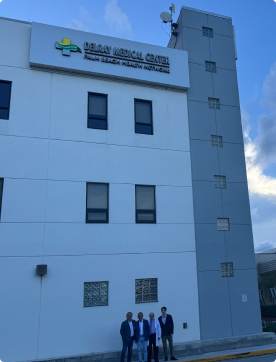
Within Palm Beach County, hospital-based spine flap reconstruction at trauma scale occurs within the Level I trauma center at Delray Medical Center.
This is structural closure — not cosmetic approximation.
Geriatric Spine Reconstruction At Level I Trauma Acuity
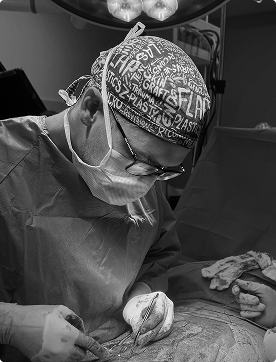
Geriatric spine surgery performed within a Level I trauma center frequently involves patients with compromised perfusion, attenuated soft tissue envelopes, sarcopenia, systemic comorbidities, and urgent operative indications.
Standard layered closure is frequently insufficient.
We have developed and refined geriatric-specific spine closure techniques designed to mitigate postoperative wound breakdown in compromised soft tissue biology.
These techniques emphasize:
- Targeted vascular preservation during dissection
- Strategic muscle advancement tailored to instrumentation span
- Reinforcement of tenuous soft tissue envelopes
- Aggressive dead space elimination
- Tension-minimized multilayer structural closure
These methods were developed and iteratively refined within the operative environment of a Level I trauma center.
A dedicated clinical case series is currently in preparation for peer-reviewed publication.
Geriatric spine reconstruction at this level is not adjunctive.
It defines durability.
Prophylactic Spinoplastic Involvement
Plastic surgical involvement occurs intraoperatively in high-risk spinal operations including revision surgery, long-segment instrumentation, prior radiation, infection history, and frail geriatric tissue envelopes.
Prophylactic muscle flap coverage reduces wound breakdown, infection, and hardware exposure.
Operative sequencing determines outcome.
In Palm Beach County, high-risk spinal instrumentation requiring flap reinforcement is coordinated within the Level I trauma center.
Catastrophic Postoperative Spine Wound Failure
Spine wound breakdown following instrumentation requires structured escalation within hospital-based operative infrastructure.
Referral patterns include hardware exposure, persistent drainage, deep infection, osteomyelitis, and failed prior closure.
Management proceeds through defined operative sequencing:
- Formal debridement
- Infection control strategy
- Negative pressure therapy when indicated
- Definitive muscle flap coverage
Hardware preservation is pursued when biologically feasible.
Catastrophic spine wound salvage at this scale is uncommon outside major trauma centers.
Structured Dual Referral Model
Complex postoperative spine wound failure frequently presents as a dual referral — to plastic surgery for soft tissue reconstruction and to spine surgery for instrumentation oversight.
No tertiary spine wound salvage proceeds without coordinated involvement of a spine surgeon within the trauma center.
Instrumentation integrity and mechanical stability are assessed in parallel with soft tissue reconstruction.
This coordinated model protects both biologic and mechanical integrity.
Community Postoperative Wound Escalation
When postoperative wound breakdown develops in the community, early intervention determines trajectory.
Incorrect or delayed escalation can accelerate infection, hardware exposure, instrumentation failure, and repeat hospitalization.
Timely operative strategy arrests deterioration and restores durable coverage.
Structured Postoperative Continuity
Spine flap reconstruction does not conclude at closure.
Patients are followed through defined wound monitoring intervals with direct communication to the operating spine surgeon.
Plastic surgery remains engaged until soft tissue stability is established.
Community Postoperative Wound Escalation
Prevention And Salvage — Two Coordinated Arms
- Prophylactic flap coverage during high-risk index spine surgery
- Operative-scale salvage of failed postoperative wounds
Within Palm Beach County, this level of spine soft tissue reconstruction is delivered within the Level I trauma center.
Direct Referral
Complex spinal wound cases requiring muscle flap reconstruction may be referred for coordinated evaluation within the Level I trauma center at Delray Medical Center.