Function Is Determined Early
In high-energy extremity trauma, functional outcome is often determined by the integrity of peripheral nerve recovery.
Unrecognized or improperly sequenced nerve injury may result in irreversible motor deficit despite otherwise successful limb preservation.
Peripheral nerve reconstruction is not secondary to extremity salvage.
It defines whether salvage achieves meaningful use.
Acute & Subacute Nerve Reconstruction
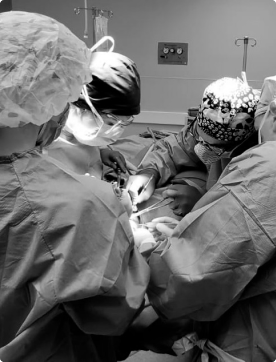
Nerve repair is integrated with skeletal stabilization and soft tissue coverage when indicated.
Reconstruction may include:
- Primary neurorrhaphy
- Autologous nerve grafting
- Acellular nerve allograft reconstruction
- Conduit-assisted repair
- Staged reconstruction in complex injury
Acellular cadaveric nerve grafts are utilized in both acute and post-acute settings to bridge segmental loss and preserve motor recovery potential when appropriate.
Sequencing is deliberate and aligned with perfusion, stability, and durable soft tissue coverage.
Nerve As The Defining Variable In Limb Salvage
Limb survival without functional nerve recovery results in limited utility.
Peripheral nerve reconstruction is coordinated with:
- Tendon restoration
- Muscle viability
- Structural reinforcement
- Rehabilitation sequencing
Functional planning begins at the index operation.
Motor recovery, sensory restoration, and neuroma prevention are structured longitudinally.
In complex extremity reconstruction, nerve integrity is often the variable that determines final functional capacity.
Trauma-Integrated Microsurgical Infrastructure
Advanced peripheral nerve reconstruction requires microsurgical capability embedded within trauma-scale infrastructure.
Stable fixation, vascular coordination, durable coverage, and structured rehabilitation must align.
These elements are integrated within a Level I trauma environment capable of immediate escalation if required.
Nerve recovery is monitored deliberately and adjusted over time.
Delayed & Tertiary Reconstruction
Peripheral nerve injury is frequently under-recognized in the acute trauma period.
Delayed referral for persistent motor deficit, sensory loss, or painful neuroma significantly alters functional potential.
Early tertiary consultation preserves reconstructive latitude.
When necessary, revision nerve reconstruction or staged procedures are performed to restore meaningful function.
Delay narrows options.
Professional Referral
Consultation may be requested for:
- Acute nerve transection
- Segmental nerve loss
- Delayed motor deficit
- Painful neuroma
- Failed prior nerve repair
- Functional restoration planning