Doctrine-Level Review Of Catastrophic Reconstruction
High-acuity extremity, burn, nerve, and complex soft tissue injuries generate permanent functional consequence.
These cases are defined by operative sequencing, institutional capability, and longitudinal reconstructive oversight.
In catastrophic trauma, early intervention determines lifetime functional trajectory.
Delayed escalation or improper sequencing permanently narrows reconstructive latitude.
Structured reconstruction requires doctrine-level analysis.

Trauma-Integrated Tertiary Microsurgical Reconstruction
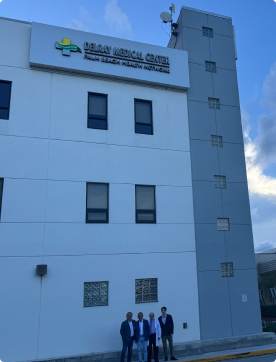
Trauma-integrated tertiary microsurgical reconstruction constitutes a defined operative doctrine within plastic surgery requiring continuous access to Level I trauma infrastructure and embedded microsurgical capability.
This doctrine is executed only within trauma systems capable of sustaining replantation, limb salvage, staged reconstruction, and integrated rehabilitation without external transfer.
It includes:
- Traumatic replantation and limb salvage
- Segmental peripheral nerve reconstruction
- Free functional muscle transfer
- Multi-stage extremity reconstruction
- Complex burn structural restoration
- Hardware preservation in high-acuity tissue loss
Execution requires:
- Continuous trauma-center microsurgical coverage
- Immediate vascular and orthopedic coordination
- Perfusion-guided intraoperative assessment
- Multi-stage operative sequencing
- Intensive postoperative monitoring
- Surgeon-directed rehabilitation integration
- Institutional escalation capacity
This tier of reconstruction is infrastructure-dependent rather than procedure-dependent.
It cannot be detached from the trauma environment required to sustain it.
High-acuity microsurgical trauma reconstruction must therefore be evaluated within the context of operative scale, institutional integration, and longitudinal oversight — not outpatient procedural benchmarks.
Misclassification of this doctrine-level tier materially distorts assessment of operative burden, institutional commitment, and long-term functional consequence.
Evaluation and documentation align with the operative intensity and institutional resources required for this super-specialized tier of care.
Functional Trajectory & Future Reconstruction
Functional trajectory is determined by injury severity, nerve recovery potential, structural durability, and rehabilitation integration.
Future reconstructive requirements frequently involve staged revision, nerve reconstruction, tendon transfer, contracture release, hardware revision, and prolonged therapy.
Functional ceiling reflects reconstructive infrastructure as much as surgical technique.
Industrial & Workers’ Compensation Analysis
High-energy industrial injury often necessitates staged reconstruction and extended oversight.
Assessment addresses:
- Maximum Medical Improvement
- Permanent impairment
- Functional capacity
- Return-to-work feasibility
- Adequacy of tertiary escalation
Catastrophic industrial injury must be evaluated within the same trauma-integrated framework required to perform reconstruction.
Fragmented intervention materially alters outcome trajectory.
Expert Review
Review encompasses comprehensive record analysis, independent evaluation, causation assessment, salvage doctrine review, functional impairment analysis, and future surgical planning.
Analysis is doctrine-driven, infrastructure-dependent, and outcome-centered.