When the Injury Exceeds Standard Care.
Definitive surgical management of limb-threatening trauma, complex tissue loss, and high-acuity reconstructive failure.
Severe extremity and spinal injuries require disciplined judgment, microsurgical capability, and decisive execution.
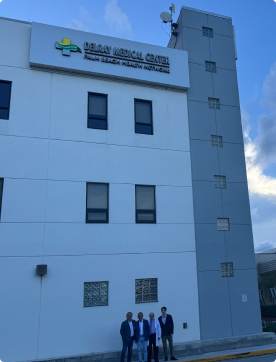
Plastic Surgery Trauma Associates (PSTA) is a hospital-based reconstructive trauma group operating within a Level I trauma system.
Extremity & High-Energy Trauma Reconstruction
Management of limb-threatening injuries following high-impact motor vehicle and motorcycle collisions, industrial crush trauma, and severe soft tissue compromise.
- Degloving injuries — open and closed (Morel-Lavallée lesions)
- Open fractures with exposed bone or hardware
- Avulsion injuries
- Mangled extremities
- Traumatic amputations
- Peripheral nerve transection and complex nerve injury
Microsurgical revascularization, peripheral nerve reconstruction, staged debridement, vascularized tissue transfer, and structured limb salvage protocols are integrated within a Level I trauma environment.
Surgical sequencing determines outcome.
Traumatic Replantation & Limb Salvage
Regional upper extremity replantation capability, including complete and partial finger and arm reattachment.
Microsurgical arterial and venous repair, nerve reconstruction, tendon restoration, and structured postoperative monitoring coordinated within a trauma-integrated infrastructure.
Time, experience, and systems coordination determine viability.
Complex Instrumentation & Deep Surgical Wound Salvage
Reconstruction in the setting of exposed hardware, deep surgical wound failure, and instrumentation-associated infection.
Spinoplastics™ — Prophylactic muscle flap coverage during high-risk spinal instrumentation and structured salvage of postoperative wound breakdown.
Cardiothoracic Reconstruction — Management of deep sternal wound complications including debridement, sternal stabilization and plating, chest wall reconstruction, and vascularized muscle flap coverage.
Orthopedic Extremity Hardware Coverage — Soft tissue reconstruction over exposed plates, rods, joint replacements, and fixation devices in trauma or postoperative failure.
Objective: structural preservation, infection control, and durable soft tissue protection of instrumentation.
Referral-Level Wound Reconstruction
Referral-Level Wound Reconstruction
PSTA serves as an escalation referral center for complex cases declined or deferred in other practice environments.
- Chronic non-healing wounds
- Hardware exposure
- Postoperative wound breakdown
- Infection-associated tissue loss
- Failed prior closure
Reconstructive wound salvage requiring staged debridement, vascularized tissue transfer, and longitudinal oversight.
Geriatric Trauma Reconstruction & Tissue Salvage
High-volume geriatric extremity reconstruction following fragility fractures, falls, and complex soft tissue compromise.
Transition from tissue replacement toward tissue salvage strategies emphasizing preservation of native vascularized tissue and biomechanical stability.
Techniques developed within this program have been published in peer-reviewed journals and referenced internationally.
Durable healing in physiologically vulnerable patients.
Catastrophic Injury Reconstruction & Escalation Care
Catastrophic Injury Reconstruction & Escalation Care
- Mangled limbs
- Severe degloving injuries
- Hardware-associated infection
- Limb-threatening tissue loss
- Complex peripheral nerve destruction
- Failed prior salvage attempts
Structured escalation protocols, microsurgical reconstruction, nerve repair, staged infection control, and long-term functional planning are deployed when conventional approaches are insufficient.
When others conclude no further options exist, escalation-level reconstructive evaluation may still identify viable surgical pathways.
Level I Trauma Integration. Academic Leadership.
PSTA operates within a Level I trauma system in coordination with orthopedic trauma, spine surgery, vascular surgery, cardiothoracic surgery, and critical care teams.
Active academic involvement and resident training responsibilities.
Practice-Driven Innovation
Innovation in reconstructive trauma is refined in high-volume clinical environments managing complex injury patterns in real time.
PSTA has pioneered surgical techniques published in peer-reviewed journals, presented nationally and internationally, and incorporated into reconstructive practice beyond our institution.
Clinical volume informs innovation. Innovation informs protocol. Protocol informs outcome.
A Distinct Subspecialty Within Plastic Surgery
Plastic surgery encompasses a broad range of elective and reconstructive procedures.
PSTA is a hospital-based, subspecialized reconstructive trauma group dedicated exclusively to high-acuity limb salvage, traumatic replantation, complex peripheral nerve reconstruction, instrumentation salvage, geriatric extremity preservation, and tertiary wound reconstruction.
Only a limited number of surgeons in any region dedicate their practice to this level of reconstructive trauma complexity.
This is tertiary reconstructive trauma subspecialization.
Medical–Legal Consulting
Expert reconstructive trauma analysis in support of advocates for the injured.
PSTA is available for direct attorney and case manager referral in catastrophic and complex injury cases requiring escalation-level reconstructive evaluation.
- Surgical standard-of-care review
- Causation analysis
- Catastrophic injury assessment
- Reconstructive damage modeling
- Future surgical and functional cost projection
Grounded in active high-acuity surgical practice and longitudinal management of complex extremity injuries.
Final Call To Action
Escalation-level injuries require escalation-level reconstructive leadership.
Direct referrals accepted from physicians, attorneys, and case managers for catastrophic and complex injury cases.