When the Injury Exceeds Standard Care.
Institutional Doctrine in Reconstructive Trauma
Advanced Wound Salvage & Reconstructive
Tissue Doctrine
Complex geriatric avulsion or fragile tissue injury requires immediate intervention. Delay narrows options. Programmatic reconstructive doctrine is informed by peer-reviewed publication and physiologic investigation.
Geriatric Trauma Tissue Salvage
Fragile dermal structures and perfusion-limited tissue in elderly trauma patients require modified reconstructive strategy. Management prioritizes structural stabilization, perfusion preservation, and staged wound integration.
Reconstructive Trauma Divisions
Tertiary reconstructive services organized by physiologic complexity and structural injury.

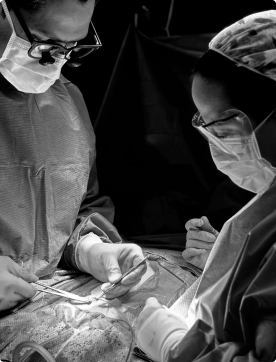
Extremity & High-Energy Trauma Reconstruction
Limb salvage and reconstruction for exposed bone, hardware, and structural extremity injury

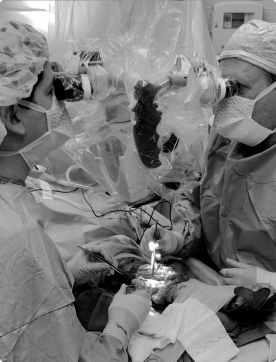
Spinoplastics — Spine Soft Tissue Reconstruction
Muscle flap coverage supporting complex spinal instrumentation.

Facial Fracture & Craniofacial Trauma
Reconstruction of high-energy facial fractures and panfacial skeletal injury.

Limb Salvage & Replantation
Microsurgical revascularization and staged reconstruction after traumatic amputation.

Peripheral Nerve Reconstruction
Nerve repair, grafting, and functional recovery integrated within extremity salvage.

Burn & Complex Wound Reconstruction
Tissue coverage and staged stabilization for burns and complex wounds.
Integrated Within a Level I Trauma System
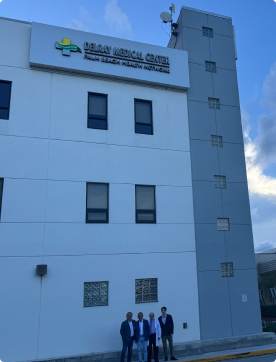
Clinical services are delivered within an ACS-verified Level I trauma center, coordinated across orthopedic trauma, vascular surgery, spine surgery, cardiothoracic surgery, and critical care.
Operative sequencing, perfusion assessment, and staged reconstruction are executed within
continuous inpatient monitoring and tertiary referral infrastructure.
Reconstruction is not isolated procedure. It is system-integrated surgical strategy.
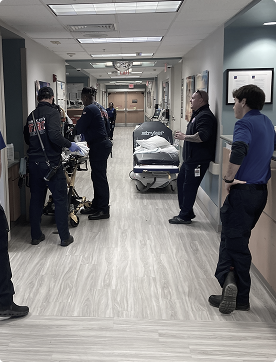
When to Escalate / Transfer
Early escalation influences structural durability and functional outcome.
Transfer is appropriate for:
- Traumatic amputation or threatened replantation
- Exposed bone, hardware, or tendon
- Perfusion compromise or evolving tissue viability
- Combined tendon and nerve injury
- Failed prior reconstruction or wound breakdown
- Complex geriatric avulsion or fragile tissue injury
DELAY NARROWS OPTIONS.
Geriatric Trauma Tissue Salvage
Fragile dermal structures and perfusion-limited tissue in elderly trauma patients require modified reconstructive strategy.
Management prioritizes structural stabilization, perfusion preservation, and staged wound integration within multidisciplinary trauma care.
These injuries are not minor. They are physiologically unstable.
Research & Academic Foundation
Programmatic reconstructive doctrine is informed by peer-reviewed publication, physiologic
investigation, and national surgical presentation
- Perfusion-guided operative decision-making
- Structural muscle-based reconstruction (SMART technique)
- Geriatric avulsion reclassification and tissue stabilization
- Peripheral nerve integration in limb salvage
- Spinoplastics methodology for instrumented spine reconstruction
Reconstruction strategy is data-driven and systems-based