Continuity Beyond Initial Reconstruction
Care within a Level I trauma center frequently extends beyond the initial admission. High-
acuity wounds require structured follow-up to preserve reconstructive integrity and prevent
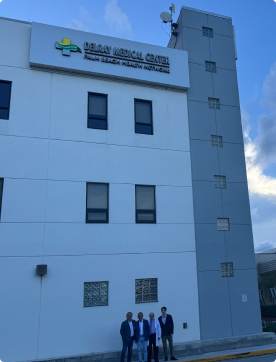
failure. This level of continuity has established the Delray Advanced Wound Center as a regional
referral destination for Palm Beach County’s most complex wounds.
A Structured Extension of Reconstructive Care
Wound management at this level is not episodic.
Patients with complex tissue loss, postoperative breakdown, or physiologically compromised
wounds require ongoing surveillance directed by reconstructive strategy—not isolated dressing
changes.
The Delray Advanced Wound Center functions as the outpatient continuation of trauma-based
reconstruction, maintaining alignment with the operative plan established during initial care.
Minor Wounds in Aging Skin
Not all wounds requiring structured care arise from high-energy trauma.
In older patients, seemingly minor injuries—skin tears, small avulsion flaps, or low-energy
blunt trauma—can behave unpredictably and progress to prolonged wound courses if not
managed appropriately.
Aging skin is more susceptible to injury due to loss of dermal thickness and elasticity, reduced
microvascular density, increased tissue fragility, and the influence of medical comorbidities.
Wounds that appear superficial may lack sufficient vascular support to heal reliably without
intervention.
For minor wounds in aging skin, early structured management often determines whether
healing occurs over weeks rather than months, while preserving quality of life by fitting care
into the patient’s daily routine.
Request Wound Evaluation
Early structured management preserves tissue and helps prevent escalation.
Integrated Clinical Oversight
Management is coordinated across disciplines based on wound characteristics and patient
physiology. This may include reconstructive surgical oversight, vascular evaluation, infectious
disease consultation, and coordination with orthopedic or podiatric services when indicated.
Treatment is individualized and guided by tissue behavior, mechanical stress, and long-term
durability.
Surveillance Designed to Prevent Failure
High-risk wounds are followed through defined intervals to identify early deviation from a
stable course.
Monitoring focuses on perfusion changes, tissue compromise, shear, infection, and early signs of
breakdown. Intervention is initiated before deterioration requires escalation.
Geriatric and High-Risk Tissue Considerations
In older or medically complex patients, wounds frequently behave unpredictably. Tissue that
appears viable may not have sufficient perfusion to support durable healing.
Management emphasizes preservation of viable tissue, protection of vascular supply, and
stabilization of tissue planes.
Direct Escalation When Required
When wound progression deviates from the expected course, escalation occurs within the same
system.
Patients may be transitioned back to operative management within the Level I trauma center,
maintaining continuity of reconstructive planning and access to necessary resources.
Early escalation preserves options.
Referral Scope
The Delray Advanced Wound Center evaluates and manages complex non-healing wounds,
postoperative breakdown, geriatric tissue injuries, hardware-associated soft tissue compromise,
and cases requiring structured oversight.
Relationship to the Reconstructive System
Outpatient wound management and operative reconstruction function within a coordinated
system designed to preserve structural integrity and support functional recovery.
Referral & Coordination
Evaluation may be initiated through direct referral to the Delray Advanced Wound Center.