Cardiac Surgery Wound Failure & Chest Wall Reconstruction – Sternal & Mediastinal Salvage
Sternal wound complications following cardiac surgery represent one of the most serious forms of postoperative reconstructive failure. These cases may arise after coronary artery bypass grafting, valve replacement, aortic procedures, or other median sternotomy-based operations.
When sternal instability, dehiscence, or mediastinitis occurs, early structural intervention determines whether the patient proceeds toward durable healing or prolonged morbidity.
- Stabilization of the sternal framework
- Elimination of infected or nonviable tissue
- Protection of mediastinal structures
- Durable vascularized coverage
- Restoration of anterior chest wall integrity
Sternal wound failure may present as:
- Sternal dehiscence
- Deep sternal wound infection
- Exposed hardware or wires
- Osteomyelitis
- Mediastinal contamination
Initial management frequently includes operative washout, removal of nonviable bone, and negative pressure wound therapy when indicated. Infection control and perfusion assessment are critical prior to definitive reconstruction.
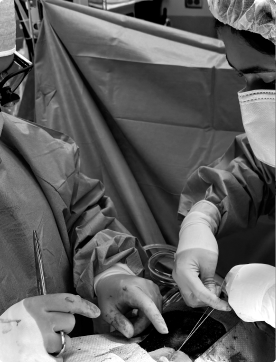
Definitive reconstruction often involves muscle flap coverage, including pectoralis advancement flaps or other vascularized tissue transfer techniques. In select cases, sternal plating may be required to restore rigid stabilization prior to flap coverage.
The integration of structural stabilization and vascularized tissue coverage reduces the risk of recurrent infection, chronic instability, and prolonged hospitalization.
Patients with sternal wound failure are often medically complex, with diabetes, vascular disease, obesity, or prior radiation exposure contributing to impaired healing. Reconstruction must therefore account for systemic factors affecting perfusion and immune response.
Operative sequencing is deliberate. Infection control precedes stabilization. Stabilization precedes durable soft tissue coverage. Close postoperative surveillance ensures resolution of infection and maintenance of chest wall integrity.
Chest wall reconstruction extends beyond cosmetic closure. It restores respiratory mechanics, protects mediastinal structures, and allows return to functional recovery following cardiac surgery.
In tertiary-level reconstruction, these cases are managed through coordinated surgical planning, infection control strategy, structural reinforcement, and long-term follow-up.
Durability in this setting is defined by stable chest wall architecture, eradication of infection, preserved cardiopulmonary function, and prevention of recurrent breakdown.