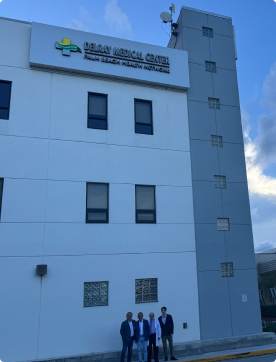
The Tertiary Endpoint For Complex Reconstruction
Catastrophic extremity, hand, burn, and complex soft tissue injuries demand trauma-scale infrastructure.
For high-acuity reconstruction in Palm Beach County, tertiary capability exists within a Level I trauma environment.
When conventional pathways plateau, escalation occurs here.
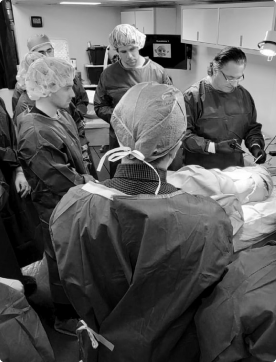
Structured Tertiary Reconstruction
Catastrophic reconstruction is not episodic. It is longitudinal, sequenced, and outcome-defined.
Definitive management integrates:
- Operative sequencing
- Perfusion-guided decision-making
- Hardware preservation strategy
- Infection control integration
- Structural muscle reconstruction when indicated
- Biologic scaffold reinforcement in select cases
- Functional endpoint planning from the outset
These cases are managed within infrastructure capable of immediate reassessment, vascular intervention, nerve reconstruction, burn management, and staged escalation without fragmentation.
Escalation is deliberate and contained within a coordinated system.
Catastrophic Hand & Functional Upper Extremity Reconstruction
Limb preservation does not equal function.
Severe hand trauma frequently leaves meaningful motor deficit despite skeletal stabilization and wound closure.
When traditional algorithms conclude, functional restoration begins.
Tertiary reconstruction may include:
- Tendon reconstruction and tendon transfers
- Peripheral nerve repair and grafting
- Acellular nerve allograft reconstruction when indicated
- Staged nerve and tendon sequencing
- Soft tissue resurfacing to restore glide
- Structural reinforcement in segmental loss
- Free functional muscle transfer, including innervated muscle transfers for restoration of active contraction
Free functional muscle transfer is reserved for select catastrophic deficits where restoration of active movement determines utility.
The objective is functional use — grip, pinch, sensation, coordinated motion.
Within a trauma-integrated microsurgical environment, meaningful improvement remains achievable even when options appear limited.
Burn Reconstruction, Contracture Release & Scar Modulation
Burn injury produces structural loss and progressive scar restriction.
Definitive reconstruction requires staged planning beyond grafting alone.
Management may include:
- Flap-based coverage
- Contracture release
- Structural reinforcement
- Staged tissue expansion for resurfacing and contour restoration
- Ablative fractional and full-field laser resurfacing to improve pliability, mobility, and graft integration
Laser therapy functions within a longitudinal reconstructive plan rather than as cosmetic adjunct.
Burn reconstruction within a Level I trauma infrastructure preserves immediate access to escalation if complications arise.
Durability and function define success.
Workers’ Compensation & Industrial Trauma
In Florida, catastrophic occupational injuries most commonly arise from construction, agricultural, industrial, and transportation-related trauma.
These injuries frequently involve:
- Degloving
- Segmental muscle loss
- Nerve transection
- Hardware exposure
- Complex soft tissue compromise
- Thermal and chemical burns
Catastrophic reconstruction cannot be reduced to isolated procedural intervention.
Durable recovery requires structured oversight, coordinated sequencing, and functional endpoint planning from the beginning of care.
The objective is progression to Maximum Medical Improvement (MMI) with meaningful functional recovery whenever biologically achievable.
In high-acuity occupational trauma, definitive reconstructive oversight established early prevents avoidable progression to limb loss, contracture, and permanent functional compromise.
Reconstructive Leadership & Longitudinal Oversight
Complex industrial injuries require centralized leadership.
This program functions as the reconstructive lead, coordinating:
- Orthopedic stabilization
- Vascular consultation when indicated
- Infection management
- Pain strategy
- Physical and occupational therapy integration
- Functional capacity progression
- Return-to-work planning when feasible
Operative strategy and rehabilitation progression align from the outset.
Care is documented, structured, and progression-oriented.
The vast majority of treated industrial injuries advance toward durable MMI and return consistent with injury severity.
Regional Continuity & Appropriate Level Of Care
Catastrophic injuries managed within a Level I trauma environment require infrastructure capable of immediate escalation.
When tertiary capability exists locally, unnecessary transfer to distant non-trauma settings fragments care and delays intervention.
Hardware exposure, vascular compromise, nerve reconstruction, burn injury, and staged flap sequencing demand immediate access to trauma-scale resources.
Continuity within a coordinated trauma center preserves limb viability, protects functional recovery, and minimizes preventable deterioration.
In high-acuity reconstruction, continuity and infrastructure directly influence outcome.
Escalation Without Delay
Delay narrows options.
Progression increases risk of:
- Limb loss
- Hardware removal
- Contracture progression
- Prolonged hospitalization
- Permanent functional compromise
Early tertiary involvement preserves reconstructive latitude.
Direct Professional Referral
Referral pathways include:
Progression increases risk of:
- Referring surgeons
- Attorneys
- Case managers
- Insurance professionals
- Risk management teams
Consultation may be requested for:
- Tertiary escalation
- Operative takeover
- Failed reconstruction
- Limb salvage evaluation
- Functional hand restoration
- Burn contracture and scar management
- Postoperative wound breakdown
- Transfer from outside facilities
Out-of-state transfer by air ambulance has been accepted for select high-acuity cases.
Professional Inquiry & Consultation
For catastrophic injury consultation, tertiary escalation, burn reconstruction evaluation, or coordinated case review within the Level I trauma center at Delray Medical Center:
[ Professional Referral ]
[ Catastrophic Case Consultation ]
[ Transfer Inquiry ]