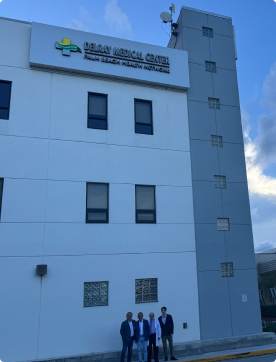
High-Energy Trauma At Level I Scale
High-impact motor vehicle collisions, motorcycle trauma, industrial injuries, crush mechanisms, and penetrating trauma produce extremity injuries that extend beyond isolated fracture or soft tissue loss.
These injuries frequently involve simultaneous disruption of:
- Bone
- Vascular inflow
- Peripheral nerve continuity
- Muscle architecture
- Soft tissue envelope
Management requires trauma-scale operative sequencing.
Extremity reconstruction at this level is not isolated flap coverage.
It is limb preservation.
High-energy extremity trauma represents a core component of Level I operative volume in Southern Palm Beach County.
Within the region, limb-threatening extremity reconstruction requiring hospital-based microsurgical and trauma infrastructure is delivered within the Level I trauma center at Delray Medical Center.
Limb Salvage Doctrine
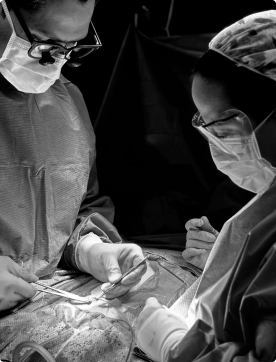
Limb salvage requires coordinated management of skeletal stabilization, vascular integrity, muscle continuity, nerve reconstruction, and durable soft tissue coverage.
Failure of sequencing increases the risk of:
Failure of sequencing increases the risk of:
- Flap loss
- Infection
- Hardware exposure
- Chronic osteomyelitis
- Progressive tissue necrosis
- Amputation
Operative strategy emphasizes:
- Early vascular control when indicated
- Structured coordination with orthopedic fixation
- Immediate protection of exposed bone or hardware
- Preservation of muscle viability
- Timely soft tissue coverage
Determination of limb viability and salvage strategy is made within a coordinated trauma framework rather than in isolation, incorporating vascular status, skeletal stability, nerve integrity, and soft tissue durability into a single operative plan.
This level of extremity reconstruction is uncommon outside tertiary trauma centers.
When limb salvage elsewhere has stalled, deteriorated, or been deemed unsalvageable, escalation to trauma-scale reconstruction may prevent amputation.
Salvage without functional recovery is not success; operative planning prioritizes long-term stability, weight-bearing durability, and preservation of meaningful limb function.
Structural Muscle Reconstruction (Smart Technique)
Segmental muscle transection and loss following high-energy trauma presents a distinct reconstructive challenge.
Traditional flap coverage restores soft tissue bulk but does not reestablish structural muscle continuity across full-thickness defects.
Within this program, a structured acellular matrix–assisted muscle reconstruction technique (SMART) was developed to restore continuity across segmental muscle transections.
This technique emphasizes:
- Biologic scaffold integration
- Preservation of native muscle architecture
- Reinforcement of structural defects prior to coverage
- Controlled integration with definitive flap reconstruction
SMART was developed within the operative environment of a Level I trauma center and has been presented at national and international surgical meetings.
The technique is currently the subject of peer-reviewed clinical investigation.
In limb salvage, restoration of structural muscle continuity influences long-term functional durability and limb viability.
Coordinated Vascular & Orthopedic Management
Complex lower extremity trauma frequently involves arterial compromise.
Successful limb preservation depends on simultaneous vascular repair and soft tissue stabilization.
Extremity reconstruction is performed in structured collaboration with a high-volume vascular surgery service within the trauma center.
Extremity reconstruction is performed in structured collaboration with a high-volume vascular surgery service within the trauma center.
Skeletal fixation, vascular integrity, and soft tissue coverage are deliberately sequenced to protect limb viability.
Replantation & Complex Hand Trauma
Traumatic amputation of digits and upper extremity segments requires microsurgical capability and trauma-scale institutional support.
Replantation demands:
- Microvascular repair
- Skeletal stabilization
- Tendon reconstruction
- Nerve coaptation
- Durable soft tissue coverage
- Structured postoperative monitoring
These procedures require operative scale, institutional infrastructure, and intensive follow-up capacity.
Upper extremity replantation and complex hand trauma reconstruction are performed within the Level I trauma center environment.
Such capability is limited to tertiary centers with microsurgical and inpatient monitoring resources.
Peripheral Nerve Reconstruction
High-energy extremity trauma frequently produces nerve transection or segmental loss.
Peripheral nerve reconstruction is integrated with skeletal stabilization and soft tissue repair within the same operative strategy.
Reconstruction may include:
- Primary neurorrhaphy
- Interposition nerve grafting
- Acellular nerve allograft reconstruction when appropriate
- Conduit-assisted repair
- Staged reconstruction when biologically indicated
Processed acellular nerve allografts are utilized in both acute and post-acute settings when segmental defects preclude tension-free primary repair. These constructs allow restoration of nerve continuity without donor-site morbidity associated with autograft harvest.
Early identification and deliberate sequencing of nerve repair significantly influence long-term sensory and motor recovery.
Functional outcome depends on:
- Timing of repair
- Length of defect
- Vascular integrity
- Soft tissue durability
- Structured postoperative follow-up
In limb salvage, nerve reconstruction is addressed proactively rather than deferred, as delayed recognition can compromise ultimate functional recovery.
Degloving Injuries & Internal Shearing Lesions
High-energy trauma frequently produces degloving injuries and Morel-Lavallée–type internal shearing lesions.
Perforator disruption and hematoma propagation compromise marginal perfusion.
Overlying tissue may appear viable while underlying vascular support is critically diminished.
Early recognition is essential.
Delayed diagnosis increases the likelihood of progressive necrosis, staged reconstruction, and potential limb compromise.
Management emphasizes:
- Prompt hematoma evacuation
- Stabilization of tissue planes
- Protection of remaining microvascular inflow
- Structural reinforcement to prevent recurrent shear
In high-energy extremity trauma, time-sensitive intervention often determines limb durability.
Trauma-Scale Infrastructure
Extremity salvage at this level requires:
- Level I trauma activation
- Coordinated orthopedic and vascular services
- Microsurgical capability
- Inpatient monitoring capacity
- Structured postoperative surveillance
Within Southern Palm Beach County, high-acuity extremity reconstruction requiring trauma-scale infrastructure is delivered within the Level I trauma center at Delray Medical Center.
Structured Postoperative Continuity
Limb preservation does not conclude in the operating room.
Structured monitoring continues through coordinated follow-up to prevent:
- Flap compromise
- Vascular failure
- Infection
- Hardware exposure
- Functional deterioration
Plastic surgery remains directly engaged during early recovery to protect durability, limb function, and long-term outcome.
Direct Referral
High-energy extremity trauma, limb-threatening injuries, failed prior reconstruction, complex muscle loss, or nerve transection may be referred for coordinated evaluation within the Level I trauma center at Delray Medical Center.
When amputation risk is under consideration, trauma-scale reassessment may provide additional salvage options.